Bike patrol units occupy a unique position in crowd events. They move faster than officers on foot, reach places vehicles cannot, and departments increasingly use bike lines as mobile fencing during demonstrations. That role puts bike officers at the leading edge of escalation, often minutes before any geared support arrives, wearing equipment chosen for pedaling rather than protection.
The Mobility Problem
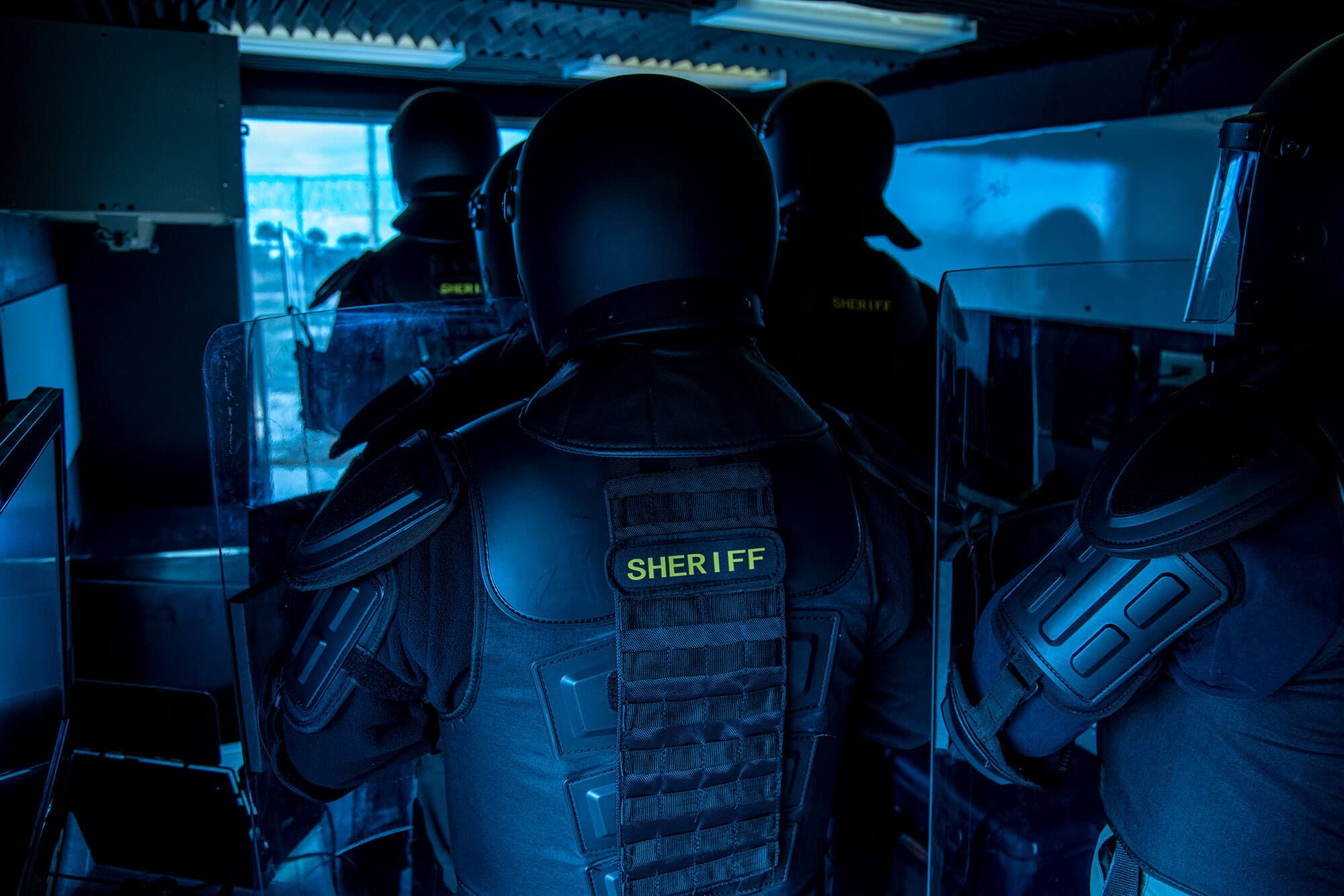
Traditional riot kit and bicycles do not mix. Heavy rigid suits restrict the hip and knee travel that pedaling requires, and gear that traps heat compounds the exertion of riding. This is where suit weight stops being a spec-sheet number and becomes the whole question. Modern molded polypropylene systems like the Patrol suit hold full-body blunt force protection to roughly 10 pounds with flexible, adjustable coverage, a completely different proposition on a bike than the rigid suits of a decade ago. PoliceOne coverage of bike unit deployments in crowd operations has documented how heavily these units depend on staying mobile to do their job.
Rapid Transition
The other requirement is speed of transition. A bike officer working a demonstration in a polo and helmet may need meaningful protection within minutes when the event turns. The Riot Limb Set answers this directly: full arm, deltoid, leg, and groin protection that attaches over the ballistic vest bike officers already wear, staged compactly in a support vehicle or at a fixed post. The transition happens at the officer, not back at a staging area.
What Next-Generation Actually Means
For bike units, next-generation gear is not about more coverage. It is lightweight materials, ventilation and hydration integration for officers already working at high exertion, and modular pieces that layer over existing kit in the field. Departments that spec bike unit protection as a distinct requirement, rather than issuing the same kit as the riot team, get units that keep their speed and get protected when it matters.