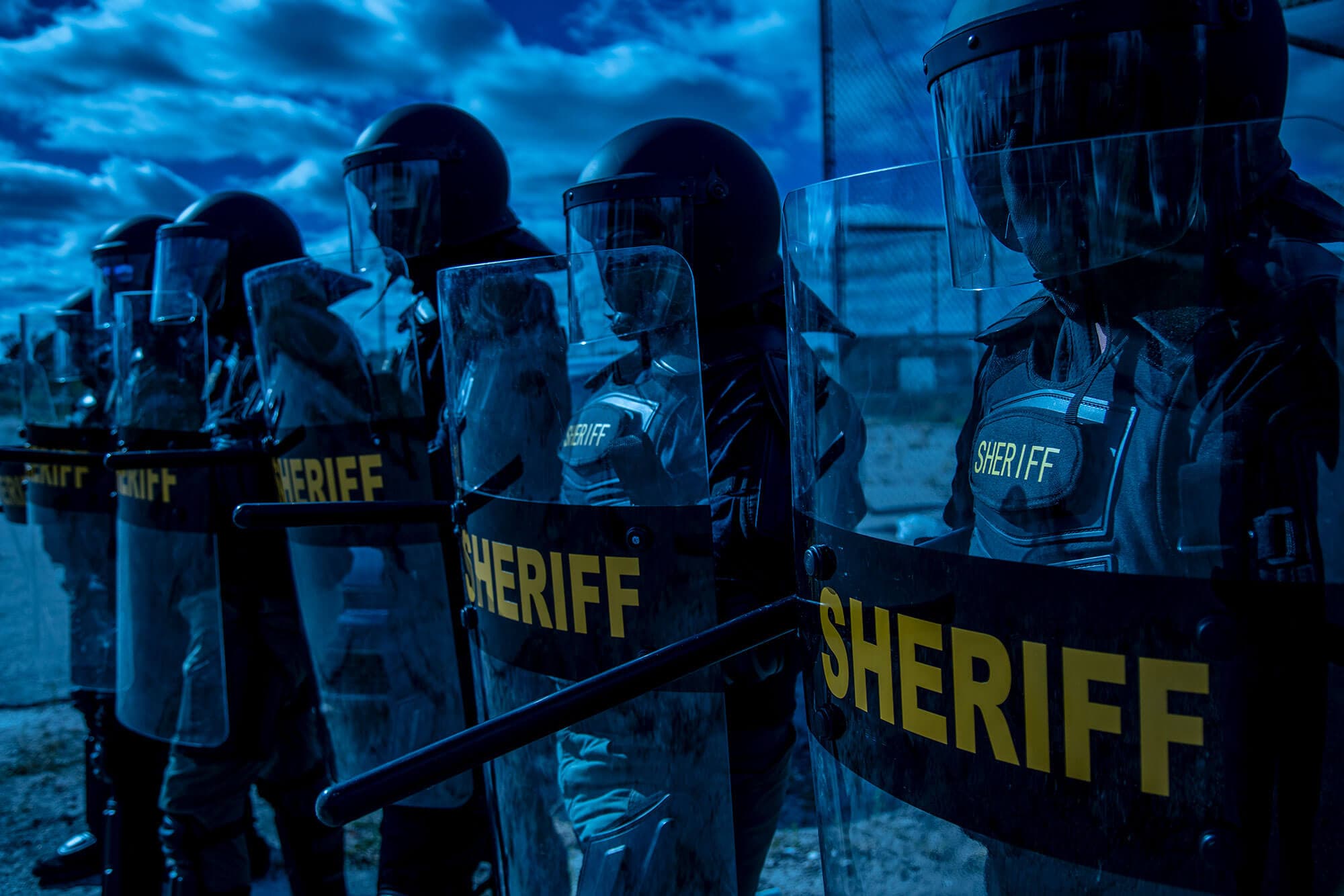
Riot gear is a category of equipment that many officers use but few study in depth. The assumptions that come from limited exposure to the gear, whether from a single training exercise or a one-time deployment, often miss important aspects of how modern systems work and what they are actually designed to protect against.
Riot Gear Is Not Monolithic
There is a wide range of protection levels within the category called riot gear. A lightweight patrol suit designed for low-level crowd management and a full modular system like the Enforcer MP with ballistic carrier integration are both riot gear, but they serve different deployment scenarios and provide very different protection levels. Officers and procurement teams who treat riot gear as a single category make worse purchasing decisions than those who understand the range.
Standards Matter
Quality riot gear is certified to specific standards: BS 7971-3:2002 for impact protection, DIN 53438 for fire resistance, ISO 6941 for flame spread. These standards are testable and third-party verified. Gear that does not cite specific compliance standards should be treated with skepticism. The NIJ provides guidance on relevant standards for different protective equipment categories used in law enforcement.
Fit Determines Protection Level
The most common failure mode of riot gear in the field is not material failure. It is coverage gaps created by poor fit. Panels that ride up, straps that loosen under movement, and shields that leave the neck exposed because the helmet sits too high are fit problems that negate the protection the gear is rated to provide. Departments that invest in proper sizing and fitting for their entire officer population get significantly more value from their gear than departments that treat sizing as a secondary concern.
Maintenance Affects Performance
Cracked panels, degraded straps, and damaged face shields reduce protection. A regular inspection and maintenance schedule ensures that gear performs to its rated specifications when it is needed. Haven Gear maintains a replacement parts inventory specifically to support ongoing maintenance and repair rather than complete system replacement.