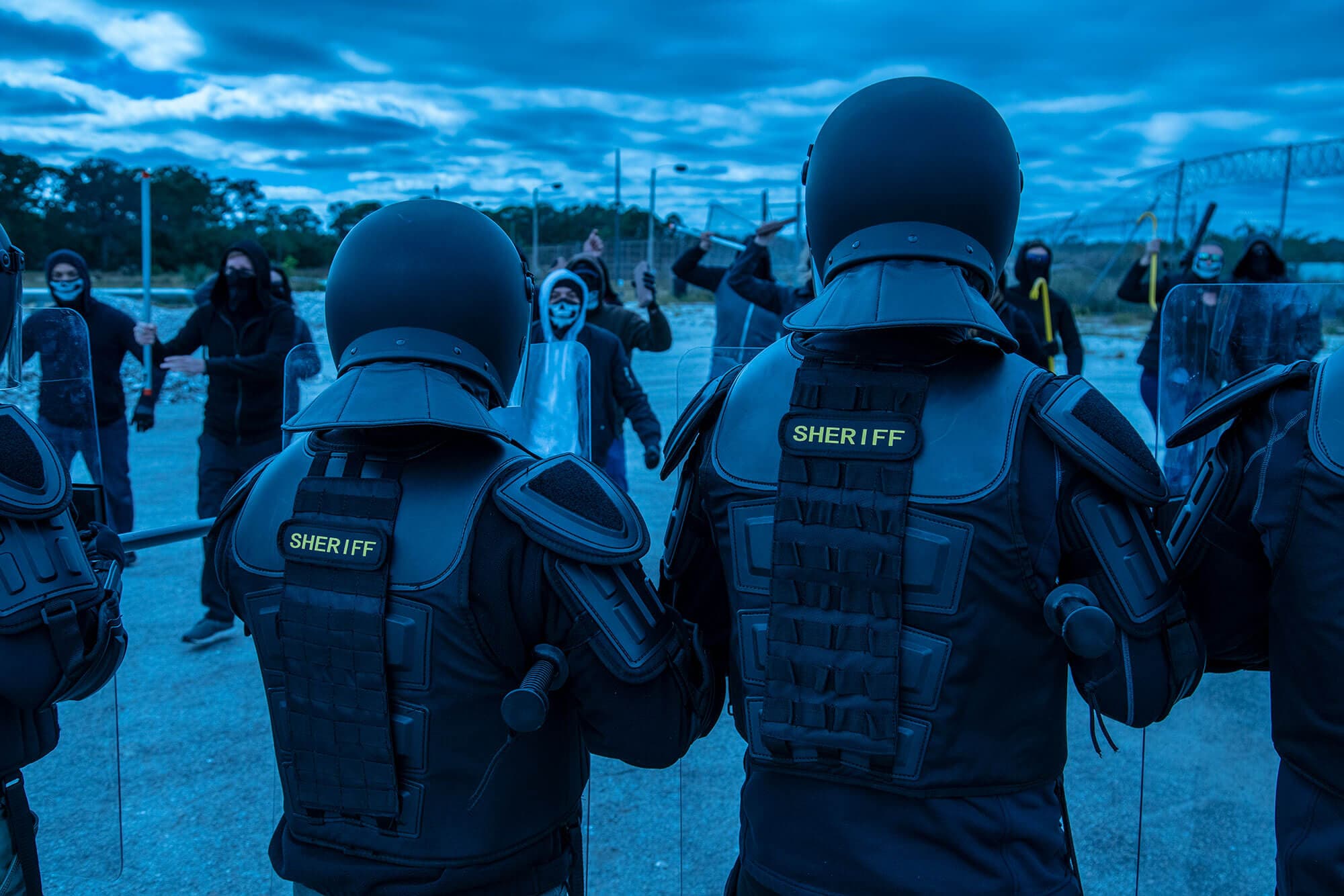
Mounted police officers are an effective crowd management resource with a unique protection challenge. Standard riot suits are designed for officers on foot, with coverage geometry, panel placement, and mobility features based on dismounted operational posture. When a foot-patrol riot suit is worn by an officer in the saddle, coverage gaps appear in predictable locations because the posture has changed but the suit has not.
The Design Problem with Standard Suits on Horseback
In a saddle, the torso rotates differently, the arms must be positioned for rein control, and the legs are spread in a posture that no dismounted suit accounts for. Panels designed to cover the thigh in a walking posture slide out of position in the saddle. Shoulder coverage designed for standing posture may pull away from the neck in mounted posture. The result is that a highly rated dismounted suit may provide substantially less than its rated protection to an officer on horseback.
Police Chief Magazine has covered mounted unit equipment needs, noting that purpose-designed mounted gear consistently outperforms adapted dismounted gear in coverage assessments conducted by mounted units during field evaluations.
How the Haven Gear Mounted Rider Suit Addresses This
The mounted rider suit was designed with equestrian posture as the baseline rather than an afterthought. Panel placement, attachment points, and mobility geometry are calibrated for a mounted officer. The saddle contact zones are clear of rigid panels that would create pressure points during extended mounted operations. The arm coverage allows full range of motion for rein control without pulling away from the shoulder protection zone.
Upper Body Protection Priority
Mounted officers are elevated compared to foot officers in a crowd, which creates a different threat profile. Thrown objects aimed at the head and upper body are the primary projectile threat. The mounted suit prioritizes upper body and head coverage accordingly. The integration with the HG-HMAT helmet is designed to create continuous coverage from helmet to torso in mounted posture, closing the neck zone gap that is common in adapted dismounted configurations.