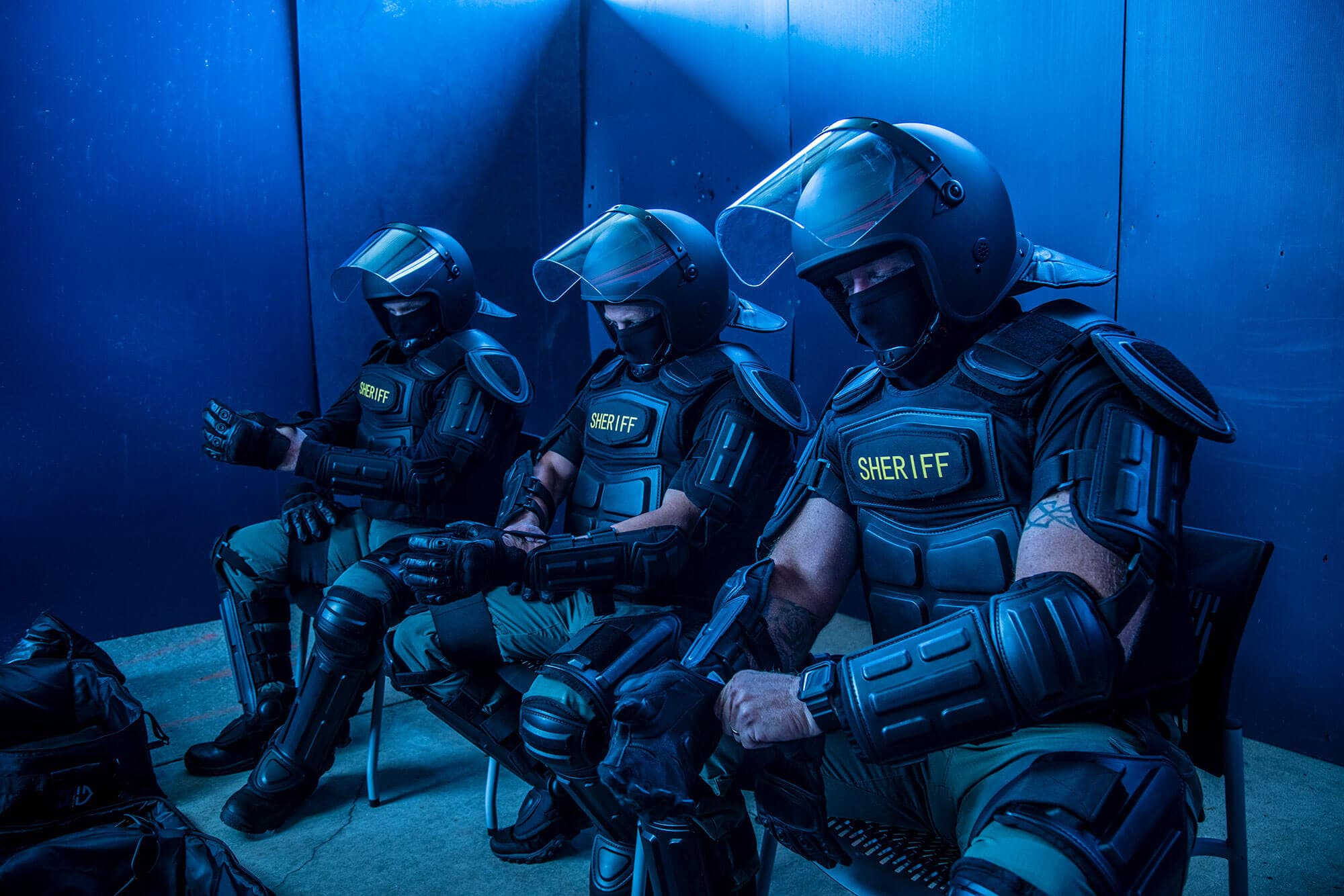
Riot gear is a materials science product. Four materials do most of the work across a modern kit, and each one is there because it solves a specific problem better than the alternatives. Once you know which material does which job, every spec sheet in the catalog becomes readable.
Kevlar: Cut and Slash Protection
Kevlar is a para-aramid fiber with extreme tensile strength for its weight, which is why it shows up wherever cutting and slashing threats meet the need for dexterity. In riot kit that means gloves: the padded Kevlar riot glove protects hands, the most exposed and most frequently injured part of an officer in a crowd, against blades, broken glass, and improvised edges while leaving fingers functional for radios and weapon retention. The same fiber family underpins the soft ballistic panels documented in the National Institute of Justice body armor standards.
Molded Polypropylene: Blunt Force
Polypropylene is the workhorse of the suit itself. Molded into rigid panels, it spreads a concentrated impact, a baton swing, a thrown bottle, a fall onto concrete, across a wide surface before it reaches the body. Its decisive advantage is weight: polypropylene panels keep a full-coverage suit near 10 pounds, where older materials produced suits officers exhausted themselves wearing. It also shrugs off water and most chemicals, which matters for decontamination after chemical agent exposure.
Polycarbonate: Transparent Impact Resistance
Polycarbonate is the only material in the kit that has to do two jobs at once: stop impacts and stay transparent. Haven Gear riot shields run 4mm polycarbonate, manufactured in the USA by Paulson, and helmet face shields use the same material family. The optical quality matters as much as the impact rating, because a shield an officer cannot see through clearly is a situational awareness penalty carried all day.
Fire Resistant Nylon: The Shell
The nylon shell ties the system together, carrying the panels, the MOLLE webbing, and the fire resistance ratings. Haven Gear shells meet guidelines for BS 7971-3:2002, DIN 53438, and ISO 6941, so incendiary contact chars and self-extinguishes rather than igniting. Every suit in the lineup combines all four materials into one system.