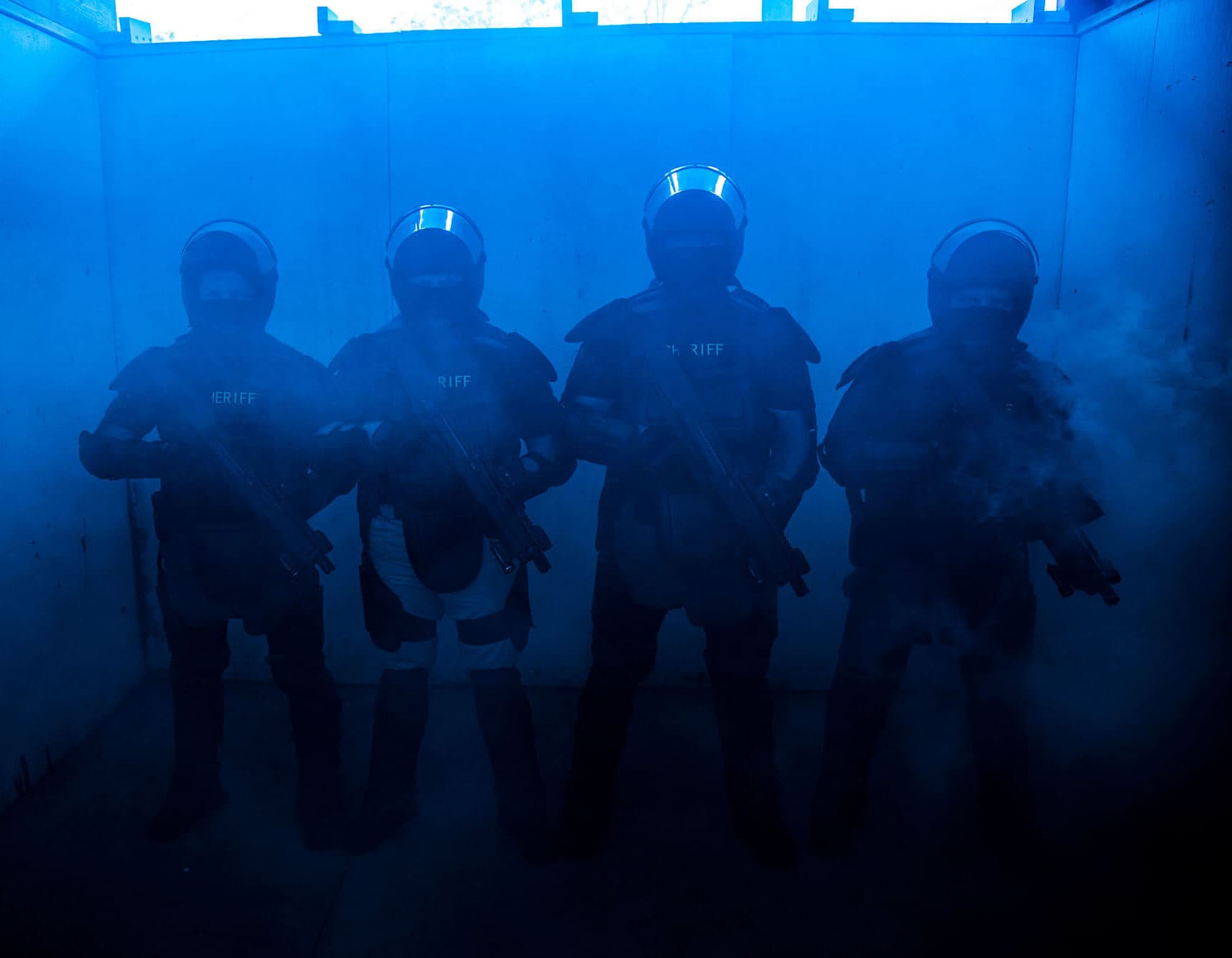
Heat management during an extended deployment is a command responsibility, not an individual one. An officer standing post in full kit generates heat faster than the body can shed it, and by the time an officer feels seriously wrong, judgment and reaction time have already degraded. The departments that handle heat well plan for it the way they plan for relief and rest: as logistics.
Rotation Schedules
Build work-rest rotations into the operations plan before deployment, scaled to temperature and humidity. In hot conditions that can mean rotating line positions every 30 to 45 minutes with recovery in a shaded, equipment-doffed cooling area, not just a step back from the line. Officer.com has covered heat casualties at extended crowd events, and the consistent thread is that departments without planned rotations lose officers to heat in clusters, usually in the third and fourth hours.
Cooling and Hydration Equipment
Haven Gear suits are built for this problem. The Enforcer and Patrol systems carry integrated hydration bladders with hoses accessible without breaking posture, and reusable cooling gel pack sets rated for roughly four hours of active cooling slot directly into the suit. Officers with water on their back drink continuously; officers who have to leave the line to drink do not. Our guide to integrated suit hydration covers how departments deploy the system.
Hydration Logistics
Individual bladders cover the first hours. After that, resupply is the constraint: staged water at the rotation point, a refill process officers can complete during a rest cycle, and electrolyte replacement for deployments past the half-day mark, because water alone does not replace what sweat removes. Supervisors should be watching for the early signs, confusion, clumsiness, and stopped sweating, covered in our post on heat stroke risk for officers. By the late signs, it is a medical evacuation, not a rest cycle.