Correctional officers work in one of the most physically demanding and situationally unpredictable environments in public safety. Understanding what that work actually looks like helps explain why equipment designed for street-based patrol or formal riot deployments does not always translate to correctional settings, and what equipment does.
Facility Rounds and Inmate Contact
A significant portion of a correctional officer's shift involves direct, close-proximity contact with inmates during rounds, headcounts, meal service, and movement between areas of the facility. This contact is routine, but it is also the context in which most incidents begin. Officers who are in physical proximity to inmates throughout their shift are in a fundamentally different risk environment than officers who interact with the public from a vehicle or behind a counter.
Protective gloves are one of the most consistently useful pieces of equipment for corrections officers across all phases of a shift, not just during extractions or disturbances. View Gloves →
Cell Extractions and Controlled Force
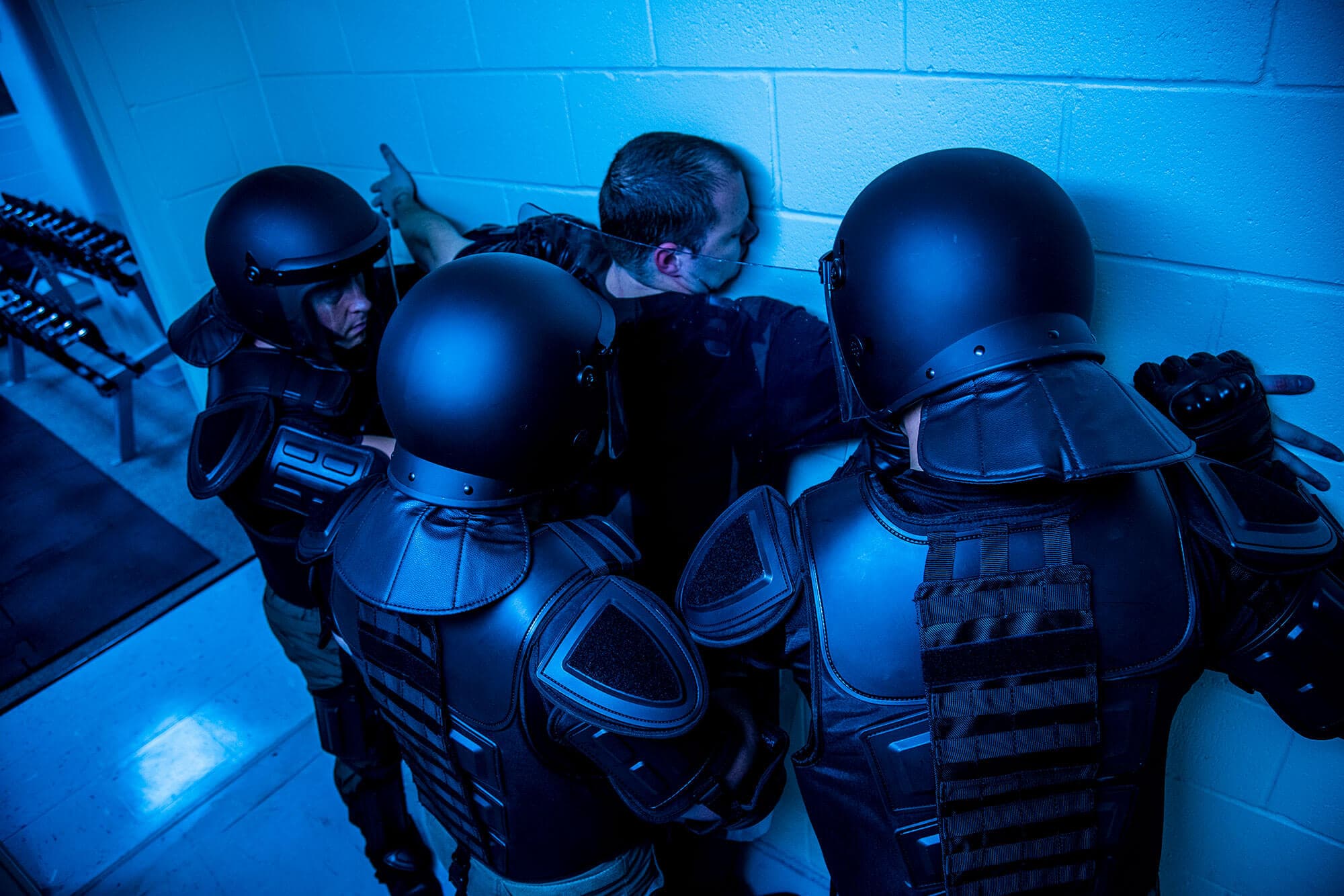
Cell extractions are among the most dangerous and predictable correctional incidents. They are planned operations but conducted in small spaces against individuals who may be armed with improvised weapons. Officers on extraction teams should have access to full protective equipment, including helmets, suits with stab-resistant construction, shields, and batons, and be trained and practiced in its use before they need it.
The Haven Gear Enforcer MP with its integrated stab-resistant construction is well-suited for extraction team deployment. The Capture Shield is the tool specifically designed for controlled subject contact in tight spaces. View the Enforcer MP →
Housing Unit Disturbances
Housing unit disturbances are less predictable than extractions and develop faster. Officers who happen to be present when a disturbance starts are the first responders, before backup arrives and before there is time to stage equipment from a central storage location. Gear available at the officer's location when the incident starts is the gear that matters. This is the operational case for limb kits and rapid-deployment gloves staged within reach rather than locked in a central equipment room.
Administrative and Transit Duties
Correctional officers also handle administrative functions, inmate transport, visitation oversight, and other duties that require a professional, non-threatening appearance. The same dual-role challenge that patrol officers face at public events applies here. Equipment that looks appropriate for all phases of a shift, not just the high-risk phases, is equipment that gets worn consistently.