Integrative Full-Body Defense Without the Bulk: The Case for Integrated Limb Defense
The shift in the atmosphere of a patrol shift often begins with a specific cadence on the radio, a shift from routine dispatches to a heightened, more urgent frequency. For decades, the transition from standard patrol duties to a crowd control or anti-riot posture has been defined by a significant logistical hurdle: the return to the precinct. This gap between the escalation of a situation and an officer’s ability to defend themselves effectively has remained a primary vulnerability for law enforcement agencies nationwide.
Modern policing requires a shift in how we view protective equipment. For too long, the industry has relied on designs that have not seen a significant overhaul since the 1970s. While ballistic technology for the torso has advanced rapidly, the protection of the extremities has often been treated as an afterthought or a secondary requirement that can only be met by bulky, slow-to-deploy “turtle suits.” This article explores the technical necessity of integrated limb defense and why the modern officer requires a modular approach to full body safety.
The Legacy Problem: 1970s Tech in a 21st-Century World
When analyzing the history of tactical gear, it becomes clear that many agencies are still utilizing defense technology that was designed half a century ago. These legacy systems were often built for a static environment where officers stood in line and absorbed impacts. However, the political and social climates of the 21st century have shifted, demanding a more dynamic response.
The primary issue with older riot gear is that it was designed with a “one-size-fits-all” mentality that prioritized mass over mobility. For a modern quick response team or a correctional officer, gear that hinders movement is often more of a liability than a benefit. In a high-tension crowd control scenario, the ability to move, to “get up when you get knocked down”, is just as critical as the ability to withstand a blow.
The technical gap identified by researchers and law enforcement personnel is the lack of versatility in standard riot suits. Traditionally, if an officer was on a standard patrol and a situation escalated into a riot, they were faced with a difficult choice: remain on-scene in standard soft armor with exposed limbs, or leave the scene to gear up, potentially allowing the situation to deteriorate further in their absence. This “gear-up gap” is where the most significant risks to public and officer safety occur.
Engineering the Solution: The Integrated Limb Kit
Recognizing this gap, Haven Gear has spearheaded a redesign of the tactical kit, focusing on a 21st-century philosophy of flexibility and safety. The centerpiece of this modern approach is the concept of integrated limb defense through a specialized Limb Kit.
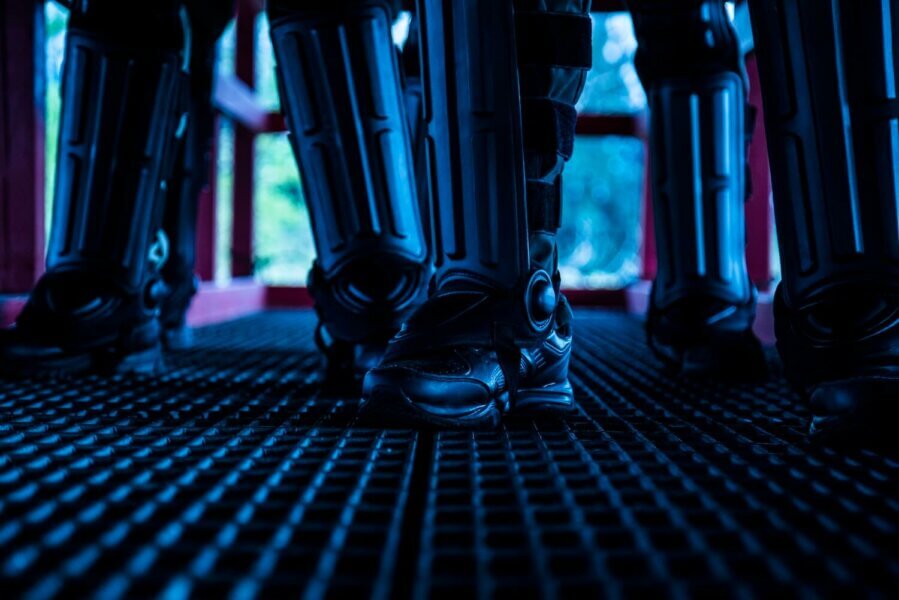
Unlike traditional suits that require a full change of clothes, a modern Limb Kit is designed to function as an extension of the gear an officer is already wearing. This kit provides comprehensive protective coverage for the arms and legs, filling the defensive void left by standard patrol uniforms. The technical brilliance of the system lies in its compatibility; it is designed to attach directly to any existing plate carrier or tactical vest that an officer is already utilizing for ballistic protection.
From a technical standpoint, the Limb Kit focuses on protecting the kinematic chains of the body, the joints and long bones that are most susceptible to blunt force trauma during civil unrest. By using advanced materials like polypropylene, these kits offer high-impact resistance without the crushing weight of historical gear. This ensures that the officer remains agile, maintaining the “unbelievable mobility” required to navigate chaotic environments.
The Logistics of Immediate Deployment
The most compelling argument for integrated limb defense is not just the protection it provides, but how it is deployed. In the past, outfitting a department meant choosing between standard duty gear and a heavy riot suit. The Limb Kit changes this paradigm by being vehicle-stowable.
Imagine an officer on a routine patrol blocks away from a burgeoning protest. In a traditional scenario, that officer would need to drive back to the station, find their locker, struggle into a multi-piece riot suit, and then drive back to the scene. This process can take 30 to 45 minutes, a precious time during which a crowd can escalate into a riot.
With an integrated Limb Kit, the officer simply pulls over, opens their trunk, and attaches the arm and leg protection to their current tactical vest. Because the gear is designed for immediate deployment, the officer can transition from a “soft” patrol posture to a “hard” defensive posture in a matter of minutes, right at their vehicle. This eliminates the need to return to the police station, keeping more boots on the ground when they are needed most. This immediate availability ensures that the brave men and women of law enforcement can safely diffuse dangerous situations without being sidelined by logistical delays.
Technical Specifications: Balancing Protection and Performance
The effectiveness of riot gear in crowd control is a delicate balance of protection, safety, and performance. When we look at the technical requirements, several factors must be considered:
- MOLLE Integration: Modern tactical vests, such as the Enforcer, utilize full-coverage MOLLE gear. The Limb Kit is designed to interface with these systems, ensuring a seamless transition between the torso and the limbs. This creates a unified defensive shell that does not leave the interstitial areas of the body, like the shoulders and hips, exposed to injury.
- Articulation and Ergonomics: One of the greatest failures of 1970s gear was the “hinge pinch.” When an officer would bend their knees or elbows, the gear would bind, slowing their movement. 21st-century designs prioritize anatomical articulation. This allows for a full range of motion, whether the officer is running, kneeling, or mounting a horse in a specialized mounted unit.
- Climate Control: Heavy gear often leads to rapid fatigue due to heat exhaustion. Modern limb defense systems, such as those found in the Patrol suit series, are designed to support hydration and cooling systems. Even when adding limb protection, the gear must remain lightweight and breathable to ensure the officer remains effective over long shifts.
- Durability: The materials used in these kits, specifically high-grade polypropylene and durable nylon, are selected for their longevity. Law enforcement gear takes a beating; it is thrown into trunks, exposed to the elements, and subjected to physical altercations. The gear must be as reliable as the officers themselves.
The Psychological Edge of Full-Body Defense
There is a psychological component to gear that is often overlooked in technical manuals. When an officer knows they are protected from the neck down, their confidence and performance improve. Using a modular system like those developed by Haven Gear allows an officer to maintain a professional, approachable appearance for 90% of their shift while possessing the hidden capability to “harden up” instantly.
This versatility is essential because modern policing is rarely about one single task. An officer might start their day conducting a community meeting and end it behind a shield line. Having a Limb Kit that is stored in the vehicle means the officer is always prepared for the worst-case scenario without looking like an occupying force during routine duties. This balance is critical for maintaining public trust while ensuring that the officer has the “unrivaled safety” they deserve when things turn violent.
Case Study: The “Golden Hour” of Crowd Control
Tactical experts often speak of the “Golden Hour”, the window of time where a professional police presence can de-escalate a crowd before it reaches a tipping point. If half of a response team is stuck in traffic heading back to the precinct to gear up, the team remaining on the line is understrength and over-exposed.
By utilizing integrated limb defense, the entire team can kit up at a staging area just around the corner from the event. This allows for a unified, professional appearance that signals to a crowd that the agency is prepared and equipped. The ability to “get up when you get knocked down” isn’t just a physical trait; it’s a tactical advantage provided by gear that doesn’t quit.
Furthermore, for specialized units like corrections officers or quick response teams, the mobility offered by these kits allows for rapid movement through tight corridors or over obstacles, maneuvers that would be impossible in traditional, bulky riot gear. The goal is simple: to provide the most durable and safe technology possible to get every officer home safely at the end of their shift.
Conclusion: The Future of Tactical Preparedness
The era of the “one-size-fits-all” riot suit is over. The modern officer needs a system that is as flexible and versatile as the challenges they face on the street. By focusing on integrated limb defense, agencies can provide their personnel with full-body protection without the prohibitive bulk of the past.
The Limb Kit represents the pinnacle of this shift, a modular, vehicle-stowable solution that attaches to existing ballistic carriers to provide an immediate defensive upgrade. It bridges the gap between the 1970s and the 21st century, ensuring that officers are never caught unprepared.
At Haven Gear, the mission has always been to fill the gaps in the defense technology field with innovative solutions that prioritize the safety and comfort of those who serve. By investing in gear that is flexible, mobile, and durable, departments are not just buying equipment; they are investing in the safety of their officers and the effectiveness of their response.
In the end, riot gear serves one primary purpose: protection. But that protection is only useful if it is where the officer is when they need it. Integrated limb defense ensures that the protection is always within reach, ready to be deployed at a moment’s notice, allowing law enforcement to maintain order and return home safely.