Stealth Safety: How Textile Patrol Suits Improve Officer Effectiveness
The visual landscape of modern policing is undergoing a radical transformation. For decades, the presence of law enforcement in high-tension environments was marked by a distinct, unmistakable silhouette: the heavy, black, segmented “turtle suit.” This imagery, while effective for physical protection, often sent a message of combat rather than community preservation. As Law Enforcement Agencies (LEAs) across the nation pivot toward a community safety model, the demand for gear that protects the officer without intimidating the public has never been higher. The challenge lies in maintaining elite-level police safety standards while softening the tactical footprint.
This is the era of “Stealth Safety,” where engineering and aesthetics converge to create a more effective, smart, approachable, and protected force.
The 1970s Stagnation and the Tactical Trap
To understand where we are going, we must first analyze the technical failures of the past. For nearly fifty years, riot gear technology remained largely stagnant, relying on designs first conceived in the 1970s. These legacy systems were built with a singular focus on absorbing blunt force, often at the expense of every other operational requirement. They were heavy, cumbersome, and inherently hindered the officer’s ability to move, communicate, and react.
From a technical standpoint, these older suits were “additive” gear, extra layers thrown over a uniform that created a bulky, military-style appearance. This “tactical trap” created a secondary problem: the gear itself became an escalatory factor. When officers arrive on a scene looking like a combat unit, the psychological temperature of the crowd often rises to meet that perceived threat. This shift in social and political climates has necessitated a redesign of defense technology for the 21st century, gear that is flexible, versatile, and, most importantly, safe for both the wearer and the mission.
Engineering the Textile Breakthrough
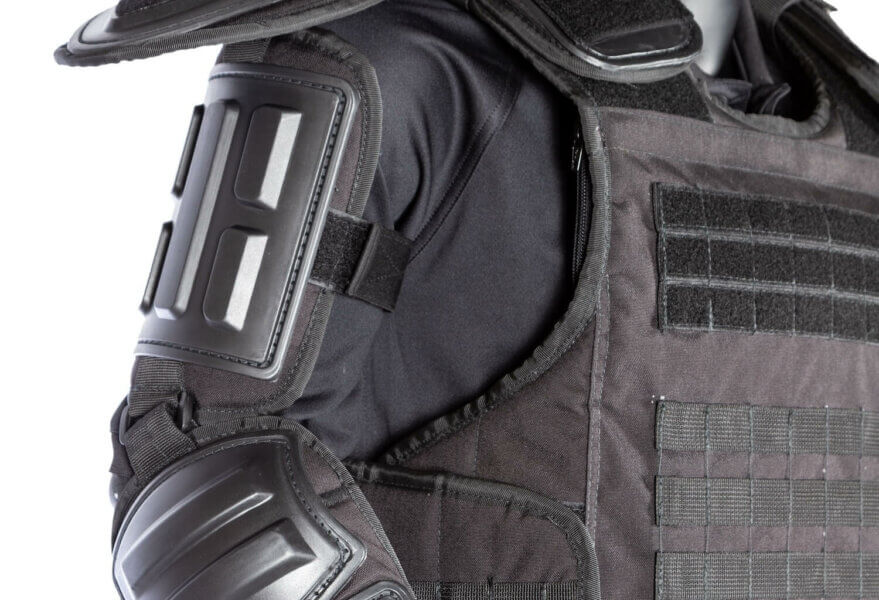
The most significant update to the modern patrol suit is the integration of textile panels. This is not merely a cosmetic change; it is a sophisticated engineering solution to the optics problem. By adding textile coverings directly over the high-impact armor plates, the gear is essentially “disguised” as a standard duty uniform.
These textile panels are designed to match the specific color palettes of a department’s daily attire, including navy, black, tan, sheriff green, and coyote. When a police officer stands on a line or moves through a neighborhood, the public no longer sees a segmented plastic shell. Instead, they see the familiar colors of their local law enforcement. This “Stealth Safety” allows the officer to maintain full-body protection while appearing as a community safety officer rather than a soldier. This modification is critical for agencies moving away from military-style tactical gear in favor of a look that emphasizes public protection over battle readiness.
The Technical Core: Protection Without Compromise
Disguising the gear does not mean compromising its performance. Underneath the textile panels of a modern Patrol suit lies a sophisticated array of defense technology. The primary protective material used in these systems is polypropylene, a high-strength polymer known for its incredible impact resistance and durability.
Unlike the brittle plastics of the past, polypropylene allows for a suit that is both lightweight and incredibly tough. In the context of the Patrol suit, this results in a non-ballistic defensive shell that provides essential full-body protection. The technical goal is to ensure that the brave men and women of law enforcement can “get up when they get knocked down,” a philosophy that prioritizes recovery and continued mobility during a chaotic encounter.
Haven Gear has been at the forefront of this redesign, working with law enforcement personnel to ensure these suits fill the gaps left by outdated technology. By utilizing modular designs, these suits ensure that every joint and vital area is covered while maintaining a slim profile that fits under or integrates with the textile duty-uniform look.
Articulation and the Kinematics of Movement
A major technical hurdle in traditional riot gear was the lack of anatomical articulation. When a police officer is in a “turtle suit,” their range of motion is restricted by the overlapping plates. Modern textile-integrated suits solve this through advanced ergonomic mapping.
Because the textile panels can move independently of the hard armor plates, the suit allows for a fluid range of motion. This is vital for officers who must navigate obstacles, transition between standing and kneeling positions, or even mount a horse. In fact, specialized versions of this technology, such as the Mounted Kit, are specifically designed to ensure that the rider maintains the mobility and comfort necessary for equestrian maneuvers while staying fully protected.
The integration of MOLLE gear, Modular Lightweight Load-carrying Equipment, into these systems further enhances effectiveness. It allows police officers to carry essential tools directly on their protective suits, ensuring that everything they need to restore peace is within reach in tactical situations. This level of integration ensures that the suit is not just a shield, but a functional platform for modern policing.
Managing the Internal Environment: Hydration and Cooling
One of the greatest threats to an officer during a long shift is not a physical blow, but heat exhaustion. Heavy, non-breathable defense gear can lead to rapid fatigue, which diminishes an officer’s decision-making capabilities and physical response time.
The 21st-century Patrol suit is engineered to be lightweight and adjustable, fitting a wide variety of body sizes while providing a breathable interior. More importantly, these suits support integrated hydration and cooling systems. By allowing for the inclusion of water reservoirs and cooling packs within the suit structure, the gear helps maintain the officer’s core temperature. This technical feature is a direct response to the needs of quick response teams and correctional officers who may be required to remain in full gear for hours at a time.
When an officer is comfortable, they are more effective. They can remain calm, communicate more clearly, and maintain the stamina required to safely diffuse dangerous situations. This focus on comfort is a hallmark of the innovative defense technology developed by Haven Gear, which aims to keep officers safe and effective throughout their entire shift.
The Psychological Edge: De-escalation Through Design
In the “Use-of-Force Continuum,” the appearance of an officer is the first level of interaction. If that appearance is overly aggressive, it can inadvertently limit the officer’s options for de-escalation. By utilizing textile-covered armor that mirrors a standard duty uniform, agencies gain a psychological edge.
“Stealth Safety” allows for a “soft” appearance with “hard” capabilities. The public interacts with a professional who looks like a traditional police officer, but that officer is actually encased in a high-tech, polypropylene shell that can withstand significant blunt force trauma. This allows for a more measured response. An officer who knows they are fully protected is less likely to feel the need to escalate force prematurely out of fear for their own safety.
This innovative approach to riot gear protection is changing the game for law enforcement. It allows agencies to tailor their equipment to their specific environmental and social needs, working with manufacturers to customize kits that suit their unique department colors and operational requirements.
Logistical Versatility and Department Customization
The transition to textile-integrated suits also offers significant logistical advantages. Because these gear suits are designed to be lightweight and modular, they are easier to store and deploy than the bulky suits of the past. They can be stored in patrol vehicles, allowing for immediate deployment without the need to return to a central precinct to “gear up.”
Furthermore, the ability to customize the color of the textile panels, whether it be navy, tan, or coyote, ensures department-wide uniformity. This consistency reinforces the agency’s brand and identity as a community-focused organization. Haven Gear sees the value in this customization, offering durable and mobile defense technology that can be adapted to the specific needs of multiple departments,. This level of versatility ensures that the gear is a long-term investment that grows with the agency’s evolving mission.
A New Standard for the 21st Century
The evolution from the 1970s “turtle suit” to the modern, textile-integrated Patrol suit represents a major leap forward in officer safety and effectiveness. By disguising elite-level protection within the familiar aesthetic of a duty uniform, agencies can protect their officers while simultaneously fostering a safer, less confrontational relationship with the public.
This technology provides the unrivaled safety and unbelievable mobility that modern policing protection demands.
It acknowledges that an officer’s effectiveness is tied to their protection, their comfort, and the way they are perceived by the community they serve. As LEAs continue to move away from military-style gear, “Stealth Safety” stands as the primary solution for the future.
Through the use of advanced materials like polypropylene and the integration of hydration and cooling systems, these suits ensure that the brave men and women of law enforcement are equipped for the most intense tactical situations without being hindered by their own gear. The goal of this innovation is singular: to provide the most durable, safe, and mobile defense technology possible to get every officer home safely. By choosing gear that is as professional as the officers who wear it, departments are investing in a safer future for both their personnel and their communities.