Police Grant Strategy in 2026: Support Programs to Fund Riot Gear for Your Department
As we move through 2026, the landscape of American law enforcement continues to face a complex evolution. Command staff and department heads are balancing the delicate act of community engagement with the absolute necessity of officer safety. The challenges of the modern era, ranging from the protection of crowded soft targets to the management of large-scale civil unrest, require more than just traditional policing tactics; they require equipment that reflects the technology and demands of the 21st century.
However, the primary hurdle for most agencies isn’t a lack of will, but a lack of budget. When city councils and county boards are tightening belts, the procurement of high-quality protective equipment often falls to the bottom of the priority list. This is where a sophisticated grant strategy becomes the most vital tool in a Chief’s or Sheriff’s arsenal. Securing the necessary funding to protect those who protect the public is no longer just an administrative task; it is a mission-critical operation.
The Stagnation of Officer Protection
For decades, the equipment provided to quick response teams and correctional officers has remained virtually unchanged. Much of the protective technology still in use today traces its origins back to the 1970s. While every other piece of police technology, from body-worn cameras to digital forensics, has leaped forward, the physical armor worn by officers during their most dangerous shifts has largely been left behind.
This stagnation creates a physical and tactical burden. Traditional riot gear is often heavy, cumbersome, and restrictive, which can actually hinder an officer’s ability to respond effectively in a crisis. When an officer is overheated, immobile, or uncomfortable, their decision-making and physical performance can suffer. In an era where every second and every movement is scrutinized, providing gear that is flexible, lightweight, and modern is not a luxury; it is a safety requirement.
Mapping the 2026 Grant Landscape
Navigating the world of public safety grants requires a proactive approach. Funding is available, but it is highly competitive and requires a narrative that connects the equipment to specific, real-world threats. In 2026, grantors are looking for agencies that can demonstrate a clear need based on crime statistics, historical incident data, and the protection of “soft targets” like stadiums, festivals, and transit hubs.
Federal Funding Pillars
The most common starting point for equipment funding is the federal government. Several key programs continue to serve as the backbone for agency upgrades:
- The Edward Byrne Memorial Justice Assistance Grant (JAG): This remains the primary source of federal criminal justice funding. Because of its flexibility, JAG funds can be utilized for a wide array of equipment. In your application, focus on how modern protective suits will enhance the effectiveness of your criminal justice activities and improve officer wellness.
- Urban Areas Security Initiative (UASI): For departments located in high-density urban environments, UASI is a critical resource. This program is designed to enhance regional capacity to respond to high-consequence events. When applying for riot gear under UASI, emphasize the gear’s role in emergency preparedness and the protection of critical infrastructure during large-scale events.
- FEMA Homeland Security Grant Program: This program is specifically geared toward preventing and responding to acts of terrorism or catastrophic events. Protective gear is a qualifying expense here, provided you can frame the need within the context of the National Preparedness System.
- COPS Hiring and Training Grants: While often associated with personnel, the COPS program frequently includes provisions for training and the equipment necessary to support that training. If your department is implementing new crowd control tactics or de-escalation training, modern protective suits can be included as part of the essential equipment package.
State and Local Alternatives
While federal grants offer the largest sums, they also come with the most red tape. State-level grants, often managed by a Governor’s Office of Emergency Services or a Department of Public Safety, can be more accessible for smaller agencies. Additionally, don’t overlook community foundations or private corporate grants. Many local businesses have a vested interest in ensuring their community remains stable and that local law enforcement is equipped to handle emergencies without the need for outside intervention.
Crafting a Compelling Narrative
To win a grant in 2026, you must move beyond simply stating that you “need new gear.” Your application must tell a story. This story should detail the specific vulnerabilities your department faces. Are you seeing an increase in violent crime? Are you responsible for the security of a new major event space?
Successful applications link equipment to “officer outcomes.” For instance, rather than focusing on the durability of a suit, focus on how its integrated cooling and hydration systems allow officers to remain on the line longer without succumbing to heat exhaustion. Discuss how mobility and flexibility in armor allow for better de-escalation, as officers who aren’t physically exhausted are better equipped to maintain professional composure and make split-second decisions.
The Modern Standard of Gear
When your funding is secured, the choice of equipment becomes the next critical decision. Modern departments are moving away from the “one-size-fits-all,” heavy-duty approach and toward modular, versatile systems. This is where Haven Gear has stepped in to fill a significant gap in the market. By listening to the needs of law enforcement personnel, they have developed defense technology that prioritizes both safety and mobility.
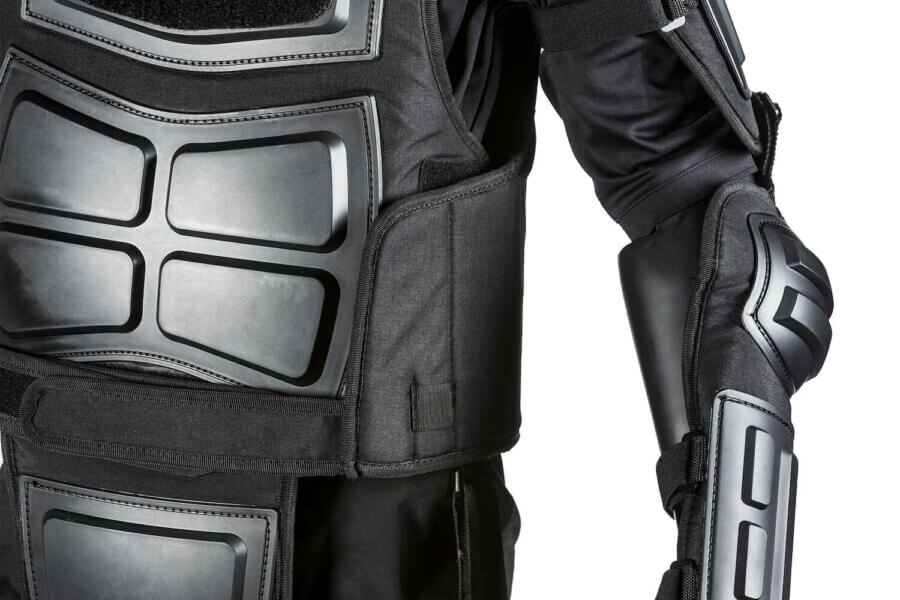
Today’s protective suits, such as the Enforcer or the Patrol models, are designed for different operational needs. The Enforcer provides full-coverage defensive gear for high-intensity tactical situations, featuring integrated MOLLE gear for versatility. Conversely, the Patrol suit offers a lightweight, adjustable alternative that is essential for long-duration deployments where hydration and cooling are paramount.
For departments with specialized units, such as mounted patrols, the requirements are even more specific. Protecting both the rider and the horse while maintaining the ability to mount and dismount quickly is a design challenge that only 21st-century engineering has truly solved. Utilizing a company like Haven Gear ensures that your department isn’t just buying armor, but is investing in a system designed to get every officer home safely at the end of their shift.
The Importance of Program Documentation
The “paper trail” is what ultimately wins the award. Grant reviewers in 2026 are looking for data-driven justifications. This includes:
- Threat Assessments: Detailed reports on potential “soft targets” in your jurisdiction and the specific risks they face.
- Inventory Audits: Documentation showing that your current equipment is outdated, past its manufacturer-recommended lifespan, or insufficient for the current threat environment.
- Training Plans: A clear outline of how the new equipment will be integrated into regular training cycles to ensure proficiency.
- Community Impact: Evidence of how improved officer safety and modern equipment contribute to overall community stability and public trust.
By treating the grant process as a strategic project rather than a chore, departments can find the resources they need to move away from 1970s technology. When you choose to partner with innovators like Haven Gear, you are sending a clear message to your officers and your community: that safety is a priority and that you are committed to the best possible outcomes for everyone involved.
Frequently Asked Questions
Can federal JAG funds be used for riot accessories like shields and batons?
Yes. The JAG program is designed to be flexible and supports a wide range of law enforcement equipment. As long as you can demonstrate that the accessories are necessary for your department’s criminal justice mission, they are generally eligible.
Is it possible to get funding for specialized gear, such as suits for mounted units?
Absolutely. Many Homeland Security and FEMA grants specifically look for “enhanced capabilities.” Since mounted units provide unique crowd management advantages, framing the gear as a specialized capability for large-scale event security is a very effective strategy.
How do we justify the cost of “next-gen” gear over cheaper, traditional options?
Focus your justification on “total cost of ownership” and “officer wellness.” Modern gear that includes hydration systems and better ergonomics can reduce injury rates and heat-related illnesses, saving the department money in the long run on workers’ compensation and overtime. Furthermore, higher-quality gear often has a longer service life than cheaper alternatives.
Are there grants specifically for correctional facilities?
Yes. Many state-level grants focus specifically on the safety of correctional officers. Additionally, federal JAG funds are often split between law enforcement and corrections, making them an excellent source for upgrading protective gear within a facility.
What is the most common mistake agencies make when applying for equipment grants?
The most common mistake is failing to connect the equipment to a specific, documented threat. Simply saying your gear is “old” is rarely enough. You must show the grantor how the new equipment will solve a specific problem or mitigate a documented risk in your community.
Conclusion
The path to fully outfitting your department with modern protective technology is paved with data, documentation, and a clear vision. While the grant landscape in 2026 is competitive, it is also full of opportunities for agencies that are willing to do the work. By moving away from antiquated designs and embracing the innovations of the modern era, you are doing more than just buying gear, you are protecting your department’s most valuable asset: its people.
Through strategic planning and the selection of high-quality, 21st-century equipment, you can ensure that your officers are prepared for whatever challenges the future may hold. The goal has always been simple: to diffuse dangerous situations safely and ensure that every man and woman in uniform returns home to their families. With the right funding strategy and the right gear, that goal is well within reach.