In mounted police operations, the horse is not just a vehicle. It is a working partner whose injury or incapacitation during an operation puts the rider at serious risk. A horse that is struck by a thrown object, startled by a chemical agent, or injured during crowd contact can unseat the rider in an environment where a fall is dangerous. Protecting the horse is inseparable from protecting the officer.
Rider Gear Adapted for Equestrian Use
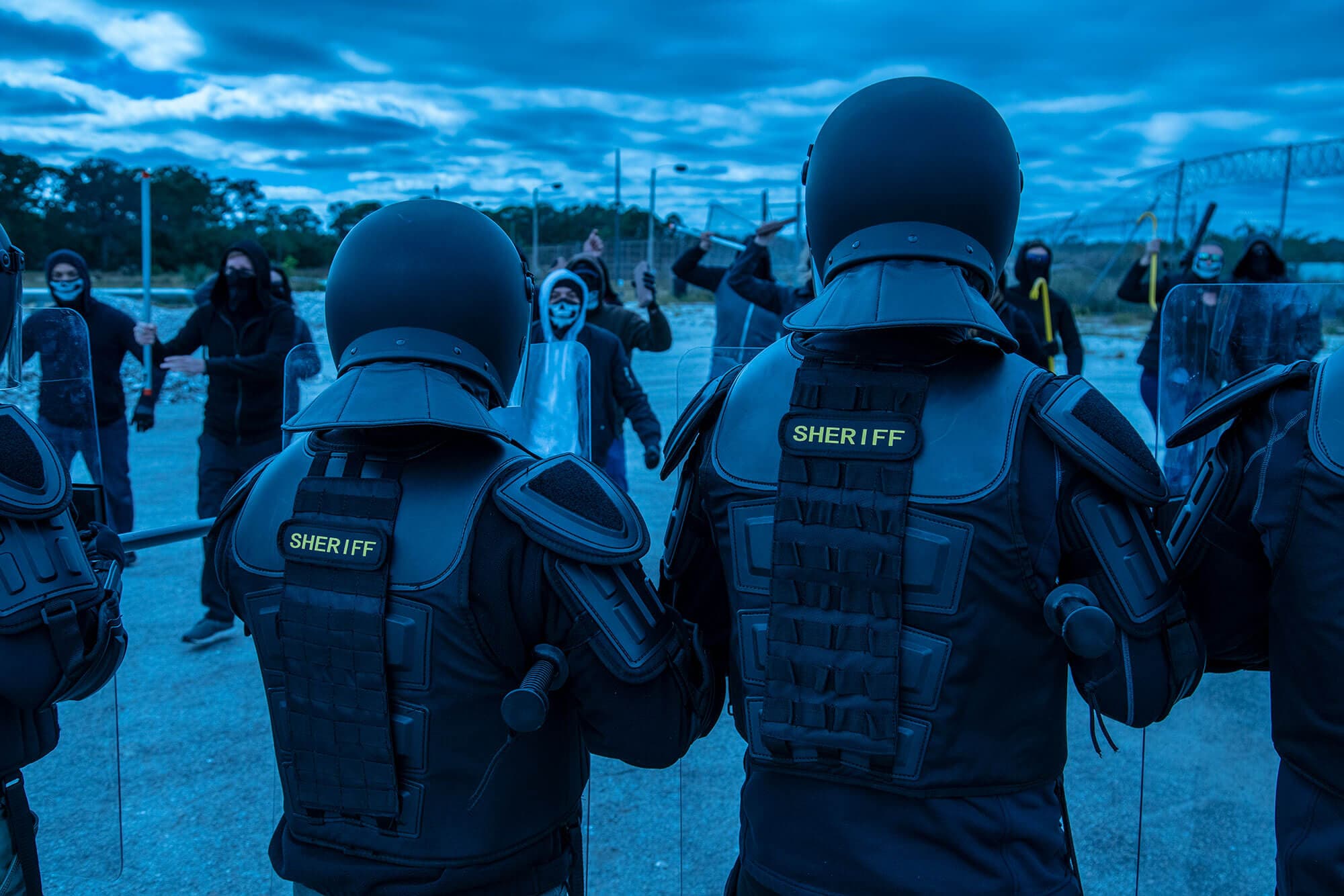
Standard riot suits are designed for dismounted officers and do not account for equestrian posture, saddle contact points, or the movement demands of mounted operations. The Haven Gear mounted rider suit addresses the specific requirements of horse-mounted officers: coverage that works in the saddle, panels that do not interfere with saddle contact, and arm protection geometry adapted for riding posture.
Officers in standard riot suits on horseback face coverage gaps created by the mismatch between dismounted and mounted posture. These are not minor inconveniences. They are locations where projectiles can impact areas the suit was designed to cover but does not in practice because of posture change.
Horse Protection Equipment
Horse leg and body protection, including shin guards and body armor designed for equestrian operations, reduces the risk of injury to the horse from thrown objects and crowd contact. A horse protected from minor strikes and physical contact is more likely to remain calm under conditions that would otherwise cause a flight response. Police Chief Magazine has published coverage of mounted unit operations noting that horse injury prevention is a primary factor in sustained operational capability for mounted units.
Training for Crowd Exposure
Horses used in crowd control operations require specific training for the sounds, movements, and physical contact associated with crowd environments. A horse that has been desensitized to crowd noise, chemical agent odors, and physical pressure is significantly more reliable in operational conditions than one exposed to these stimuli for the first time in a live situation. This training investment directly reduces officer risk by making the mount more predictable under stress.
The rider's gear needs to be evaluated in the context of mounted training as well. Officers should train in their full mounted gear configuration, including the HG-HMAT helmet and gloves, to identify any gear-related issues before operational deployment.