Polycarbonate vs Metal: Which 2026 Riot Shield Offers Better Protection?
The line is never a place for second-guessing. Standing shoulder-to-shoulder with your squad, the air thick with the sound of shouting and the rhythmic thud of objects hitting the pavement, your gear is the only thing standing between you and a chaotic situation. For decades, the image of a riot officer was synonymous with heavy, metallic protection, a literal wall of steel or aluminum designed to withstand the worst a crowd could throw. But as we move into 2026, the landscape of civil unrest has shifted, and the tools required to manage it have finally begun to catch up.
For too long, law enforcement was forced to rely on technology that hadn’t seen a significant redesign since the 1970s. This stagnation created a dangerous gap where the gear intended to protect officers was actually hindering their ability to perform. Heavy, rigid, and often opaque, old-school riot gear was built for a different era of policing. Today’s quick response teams and correctional officers require something more: they need equipment that balances unrivaled safety with unbelievable mobility. The debate between metal and polycarbonate shields isn’t just about material science; it’s about the philosophy of modern defense.
The Heavy Legacy of Metal
In the mid-to-late 20th century, metal was the gold standard. It was intimidating, durable, and offered a sense of absolute security. However, as many veteran officers can attest, that security came at a steep physical price. Metal shields are heavy, and in a situation that lasts for hours, that weight becomes a liability. Fatigue is one of the greatest threats to officer safety; a tired officer is an officer whose reaction times are slowed and whose situational awareness is compromised.
Furthermore, metal shields are inherently limited by their lack of transparency. Relying on a small viewing port or peering around the edge of a steel slab creates blind spots that can be exploited in a fluid, high-tension environment. When the goal is to safely diffuse a dangerous situation, being able to see the entire field is non-negotiable. The shift toward modern materials happened because departments realized that the most durable defense is one that doesn’t weigh the operator down or block their line of sight.
The Revolution
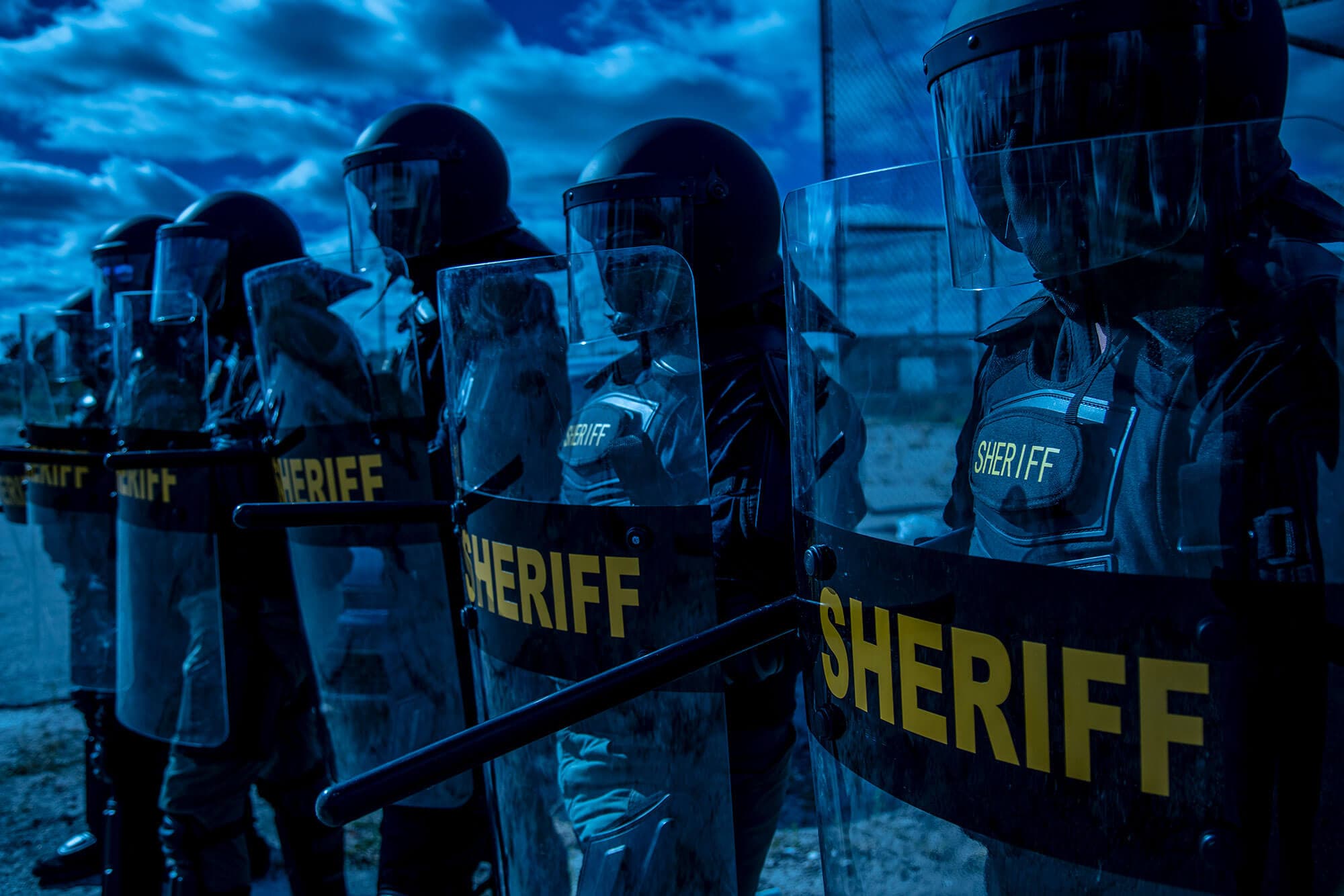
Entering 2026, polycarbonate has become the backbone of the modern riot line. Polycarbonate is an engineered defense technology designed for the 21st century. The primary advantage is immediate: weight. By significantly reducing the load an officer must carry, polycarbonate allows for a level of agility that metal simply cannot match. In tactical situations where you might need to get up quickly after being knocked down, every pound saved is a tactical advantage.
Protection, however, must always be the priority.
Polycarbonate offers incredible impact resistance, absorbing and dispersing the energy from projectiles rather than just reflecting it. This material doesn’t dent or deform in the same way metal does, maintaining its structural integrity through repeated impacts. Perhaps most importantly, the transparency of a polycarbonate shield provides a full field of vision. This allows officers to maintain eye contact with potential threats and see movement in their periphery, which is essential for maintaining the line and ensuring the safety of the entire squad.
Why Mobility is a Form of Protection
When we talk about protection, we often only think about what can stop a brick or a baton. But in modern policing, mobility is protection. If your gear is so cumbersome that it prevents you from moving effectively, it is hindering your mission. Haven Gear has recognized this problem and worked directly with law enforcement personnel to ensure that 21st-century riot gear is flexible and versatile.
The move toward integrated systems, where shields work in tandem with lightweight suits, is where the real innovation lies. Modern suits, like those designed for patrol or high-intensity tactical situations, are now being built to support hydration and cooling systems, acknowledging that an officer’s physical state is a critical component of their overall safety. When you aren’t fighting your own equipment, you can focus entirely on the task at hand: restoring peace and getting home safely.
Adapting to the Threat: Ballistic vs. Non-Ballistic
One of the most important distinctions for a 2026 officer to make is the level of threat they are facing. Standard polycarbonate shields are designed for non-ballistic protection, perfect for crowd control, correctional facilities, and managing civil unrest where the primary threats are blunt force and projectiles. They are the workhorses of the quick response team.
However, in acute, high-risk tactical situations, the needs change. This is where the integration of gear becomes vital. For example, while a shield provides the forward barrier, an officer’s suit might need to be equipped with plate carriers for ballistic protection. This layered approach ensures that the officer has full coverage without the unnecessary bulk of a one-size-fits-all solution. By customizing the kit to the specific needs of the department, law enforcement can ensure they are neither under-protected nor over-encumbered.
The Evolution of the Tactical Kit
Choosing between materials is just the beginning. A truly effective defense strategy in 2026 involves a comprehensive tactical kit. This includes everything from specialized gloves and helmets to bags designed for rapid deployment. The goal of companies like Haven Gear is to fill the gap in the industry with innovative technology that covers the officer from head to toe, including specialized kits for mounted units that protect both the rider and the horse.
Durability remains a cornerstone of this evolution. Gear needs to be long-lasting and capable of withstanding the rigors of multiple deployments. By focusing on high-quality synthetics and ergonomic designs, modern equipment provides a level of reliability that the 1970s-era gear could never provide.
FAQ: Navigating Modern Riot Protection
Is polycarbonate truly as durable as metal in a riot situation?
Yes. Modern polycarbonate is engineered specifically for high-impact resistance. Unlike metal, which can dent and become permanently deformed, polycarbonate is designed to absorb impacts and maintain its shape and clarity throughout an engagement.
How does the weight of the shield affect overall officer safety?
Weight is a major factor in officer fatigue. A lighter shield allows for better mobility, faster reaction times, and longer endurance on the line. Since the goal is to get every officer home safely, reducing the physical strain of the gear is a top priority.
Can these shields be used in ballistic situations?
Standard riot shields are typically non-ballistic. However, they are often used as part of a larger system. For situations where ballistic threats are a concern, officers should utilize gear that includes integrated plate carriers to provide the necessary level of protection.
Why is transparency considered a safety feature?
Transparency eliminates blind spots. In a fluid tactical environment, the ability to see the movements of the crowd and your fellow officers is essential for situational awareness and effective decision-making.
How has riot gear changed since the 1970s?
For decades, there was very little innovation, which led to gear that hindered officers. Modern gear has been redesigned to be more flexible, lightweight, and versatile, incorporating cooling systems and MOLLE gear for better functionality in the field.
Are there specialized shields for different types of units?
Absolutely. While a standard patrol officer might need a lightweight, clear shield, other units, such as mounted riders, require specialized kits that are designed for their unique mobility needs and the protection of their horses.
Conclusion: Choosing the Future of Defense
As we look toward the challenges of 2026, it is clear that the “wall of metal” approach is a relic of the past. The needs of modern law enforcement have evolved, and the equipment must evolve with them. Protection is no longer just about the strength of the material; it is about the visibility, the mobility, and the physical well-being of the officer behind the shield.
By embracing innovative defense technology and moving away from the stagnant designs of the 20th century, agencies can ensure their teams are equipped for success. Whether it’s the lightweight versatility of a patrol suit or the full-coverage defense required for intense tactical situations, the focus remains the same: providing the safest, most comfortable equipment in existence. Haven Gear continues to lead this charge, working alongside law enforcement to ensure that every piece of gear, from the shield to the suit, is built to meet the demands of the modern world. When you step onto the line in 2026, make sure you are carrying the future of protection, not a weight from the past.