The Riot Line Explained: How Crowd Control Formations Maintain Order
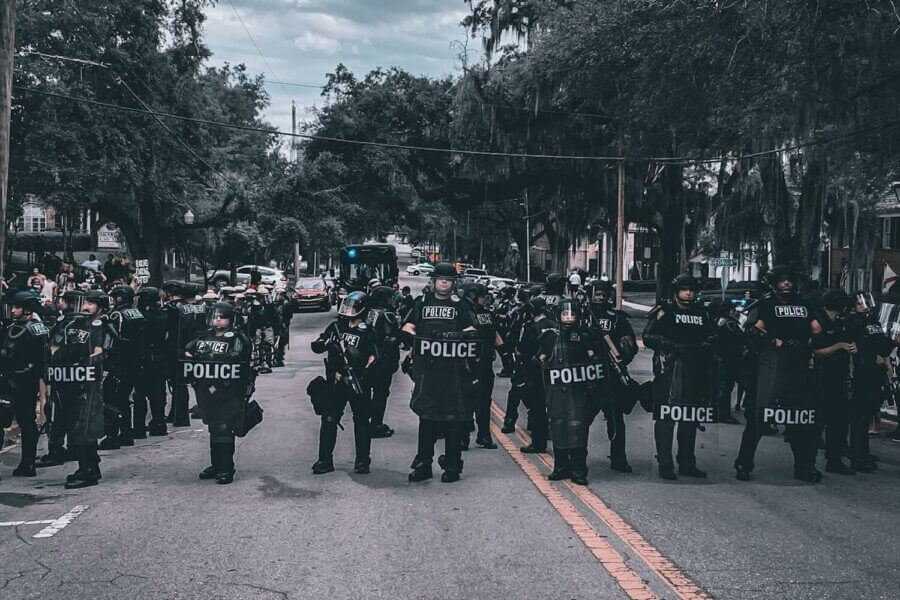
The air in a city center during a civil disturbance is thick with more than just humidity; it is heavy with tension, noise, and the unpredictable energy of a massive crowd. On one side, thousands of individuals are fueled by a singular cause; on the other, a thin line of officers stands in a formation that looks, to the untrained eye, like a simple wall of plastic and fabric. However, this “wall” is actually a sophisticated, living organism of tactical science. For decades, the public perception of riot control was defined by the images of the 1970s, heavy, clunky gear, and a “charge first” mentality. But as the political and social climates have shifted, so too has the methodology of the riot line.
Today, crowd control is less about brute force and more about the surgical application of geometry, psychology, and advanced defense technology techniques.
The Architecture of the Square Tactical Unit
In the modern era, the most effective tool in an officer’s arsenal isn’t necessarily a piece of equipment, but the formation itself. Moving away from the military-style charges of the past, which often resulted in high casualty rates and chaotic crushes, modern agencies utilize what is known as a square tactical unit. This formation is designed for 360-degree awareness and versatility, ensuring that the team is never truly “surrounded”.
A standard tactical unit is comprised of three distinct layers. At the front is the front echelon, the primary interface between the police and the crowd. These officers are responsible for engaging with the mob, holding the line, and absorbing the initial energy of a push. Directly behind them is the core of the unit, which houses the commander and an arrest team. This middle section is the brain of the formation; the commander can see over the front line to make real-time tactical decisions, while the arrest team is ready to move through the gaps to detain specific individuals who are inciting violence.
The final piece is the back echelon. While it might seem like these officers are simply waiting, they provide critical support and defense against any threats coming from the rear. The genius of the square unit lies in its interchangeability. Because the front and back echelons are trained in the same maneuvers, the unit can “spin” or shift its focus instantly, allowing them to move and cover each other as they perform complex maneuvers in a shifting environment.
From Charges to Negotiation: A Historical Shift
To understand why these formations are so vital today, one must look at the failures of the past. Historically, the primary tactic was the “simple charge,” where an impenetrable block of police would rush a crowd in hopes that the sheer psychological weight of the advancing unit would cause the mob to disperse. While intimidating, this often led to people being trampled and injured, as there were rarely clear escape routes for the crowd to take.
By the 1970s, the United States moved toward “negotiated management,” where police and protest leaders would meet beforehand to agree on routes, times, and even the number of symbolic arrests. This worked until the late 1990s, when decentralized protests, where there were no clear leaders to negotiate with, became the norm. When the terms of these agreements were violated by splinter groups, the negotiated approach crumbled. This led to the “command and control” and “envelopment” strategies used today, which prioritize breaking a crowd into manageable pieces rather than meeting them as one giant, unstoppable force.
Command and Control: The Power of Fragmentation
One of the most effective ways to prevent a protest from turning into a riot is to prevent a “mob” from ever forming. This is the essence of command and control. Instead of allowing a single massive group to occupy a large open space, tactical units work in conjunction with physical barriers, such as concrete or metal dividers, to physically break up the space.
By fragmenting a large crowd into smaller, isolated groups, officers can prevent the “mob mentality” that leads to property damage and violence. It is much easier for a tactical unit to communicate with and manage fifty people than five thousand. Once the crowd is fragmented, police can use non-lethal tools or simply directed movement to disperse the smaller groups through pre-planned exit routes.
The Strategy of Kettling
For situations where a crowd must be contained to prevent them from reaching a sensitive area or to identify individuals who have committed crimes, agencies use a tactic known as envelopment, or “kettling”. In this formation, officers encircle the crowd entirely, creating a human or barrier-based perimeter.
The name “kettling” comes from the idea of a tea kettle releasing steam. While the crowd is contained, the police provide a single, controlled gap in the cordon. This allows people to leave the area one by one or in small groups, often after being identified or recorded. It is a high-pressure tactic used globally, from Europe to Australia, and it relies heavily on the discipline of the officers on the line to remain firm but controlled as the “steam” is released.
The Intersection of Formation and Gear
A formation is only as strong as the individual officers within it, and those officers are only as effective as the gear they wear. For too long, riot gear was a hindrance, heavy, hot, and restrictive, which made maintaining a complex formation for ten or twelve hours an exhausting, nearly impossible task. If an officer in the front echelon becomes too fatigued to hold their shield or move with the unit, the entire square tactical unit is compromised.
This is where companies like Haven Gear have stepped in, acknowledging that a suit is only as effective as the officer’s ability to maneuver within it. By utilizing lightweight materials and ergonomic designs, modern suits ensure that officers can remain in formation longer and with greater mental clarity. When a suit weighs 10 pounds instead of 40, an officer can respond to a command or a physical threat with the speed required for modern “command and control” tactics.
Furthermore, modern gear is designed for modularity. A Patrol suit for a frontline officer might focus on essential full-body protection and hydration, while an Enforcer suit might include plate carriers for ballistic protection in more intense tactical situations. This customization allows departments to outfit their tactical units based on the specific role each echelon plays within the formation.
Training: The Glue of the Tactical Unit
No amount of advanced equipment can replace the need for rigorous, consistent training. Working as a cohesive unit is the only way to maintain order when facing an unpredictable crowd. If officers act as individuals rather than as a team, the strategy breaks down, reducing the overall effectiveness of the line and increasing the risk of injury.
Agencies that prioritize these modern standards often turn to Haven Gear to customize their equipment, ensuring the Enforcer or Patrol suits meet the specific logistical demands of their environment. Training must include communication drills, where officers practice reading the crowd’s energy and coordinating movements through their headgear or radio systems. It also involves the “boring” but essential work of gear maintenance, checking for loose fittings and cleaning the equipment, so that when the call comes, the gear functions exactly as intended.
The Importance of Pre-Planning and Mobility
Every successful crowd control operation begins long before the first officer steps onto the street. Pre-planning involves gathering intelligence, establishing a clear chain of command, and devising emergency protocols for unforeseen circumstances. Part of this planning is ensuring the team has the right tools for the job.
Older, heavier equipment often meant that officers were static; once they were in place, they stayed there because moving was too taxing. Today, mobility is the priority. The ability to quickly shift a line, perform a “kettling” maneuver, or move an arrest team into the center of a crowd requires gear that doesn’t feel like a cage. The goal of Haven Gear remains singular: to ensure that through superior mobility and protection, every officer returns home safely after a shift on the line.
Frequently Asked Questions
What is the main advantage of a square tactical unit over a traditional line?
A square tactical unit provides 360-degree protection and is highly versatile. It allows a team to be interchangeable, with front and back echelons that can swap roles or shift directions instantly to meet threats from any angle.
Why do police use “kettling” instead of just dispersing the crowd?
Kettling, or envelopment, is used when a crowd needs to be contained rather than just moved. It allows police to control the space, prevent protesters from entering sensitive areas, and manage the dispersal of people through a single, controlled exit point.
What makes modern riot gear different from the gear used in the 1970s?
Gear from the ’70s was often heavy, bulky, and restrictive, which hindered officer movement and caused rapid fatigue. Modern gear is designed to be lightweight, durable, and mobile, often featuring integrated cooling and hydration systems to keep officers effective for longer durations.
What are the key elements of a “command and control” strategy?
This strategy focuses on breaking a large crowd into smaller, fragmented groups using physical barriers and tactical positioning. By preventing a large mob from forming, police can more easily manage and disperse the smaller groups with less risk of a major confrontation.
How important is teamwork in riot control formations?
Teamwork is the most critical component. If officers act as individuals, the formation’s strategy breaks down, creating gaps that a crowd can exploit. Consistent training ensures that every member of the unit knows their role and can communicate effectively under pressure.
Can riot suits be customized for different roles?
Yes, modern riot gear is highly customizable. Departments can choose between different levels of protection, such as the lightweight Patrol suit for general crowd control or the Enforcer suit for intense tactical situations that may require ballistic plate carriers.
Conclusion
The riot line is not a relic of the past; it is a vital, evolving tool for public safety. By combining the lessons of history with the tactical precision of modern formations like the square unit and kettling, law enforcement agencies can maintain order while minimizing the risk of injury to both officers and civilians. In this high-stakes environment, the difference between a successful operation and a tragic outcome often comes down to the split-second mobility provided by 21st-century gear and the disciplined training of the men and women who wear it. As tactics continue to advance, the focus remains on diffusing danger and ensuring that at the end of the day, everyone makes it home safely.